Mental Health Is Never One Thing
Four areas that shape how we feel, think, and function
A common misunderstanding about mental health is that it lives only in the mind. That if we could just think differently, understand more, or apply the right insight, things would improve.
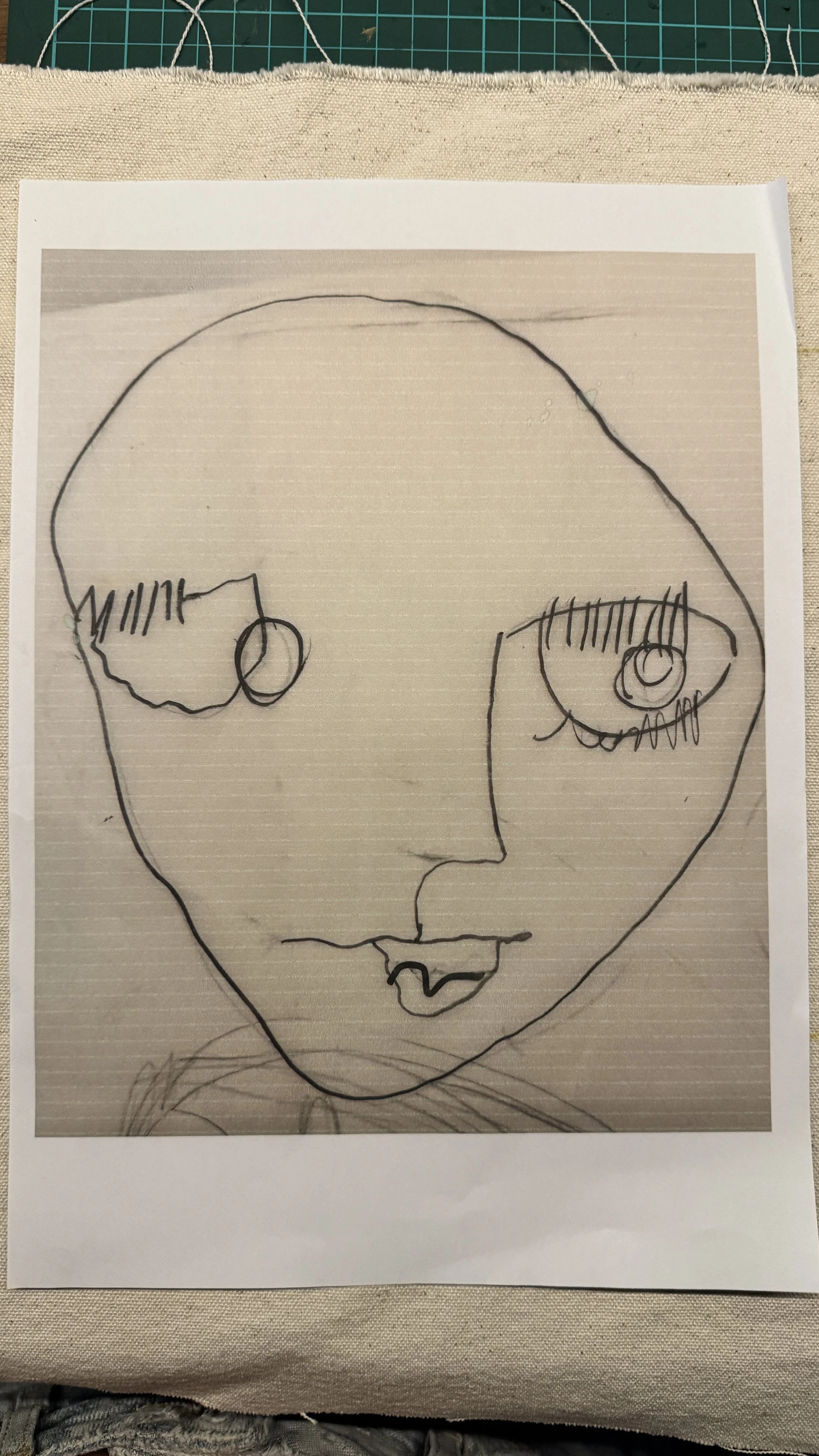
Self portrait- 2026
What often gets missed is something more humane:
Mental health is shaped by multiple conditions operating simultaneously.
This framework doesn’t aim to fix anything.
It offers a way to understand what’s present, without mistaking it for personal failure.
I use four circles to describe this:
Capacity
Load
Context
Orientation
Each circle affects the others. None of them works in isolation.
1. Capacity (The biological foundation)
Capacity is the amount of mental, emotional, and physiological energy available in the system at a given moment.
It determines what the brain can access:
clarity
patience
motivation
emotional range
a sense of meaning
When capacity is high, life feels more workable. When capacity is low, everything requires more effort — even things we understand deeply.
When capacity is low, insight does not convert into action because the system is operating with limited resources.
We don’t usually experience this as “low capacity.” We experience it as:
thinking feeling slow, mental fog
motivation disappearing
emotions becoming sharper or flatter
losing interest in things we care about
This is not a character issue. It’s a state.
2. Load (Mental weight)
Load refers to the amount of unresolved mental and emotional strain the system is holding.
This includes:
unfinished decisions
constant self-monitoring
internal conflict
repetitive thinking
emotional bracing
Load is not about how intelligent or reflective someone is. In fact, highly thoughtful people often carry more load, more weight.
A common misunderstanding is that insight automatically reduces load. Often, it doesn’t.
Understanding something without resolution can actually add strain.
This is why people can know exactly why they feel the way they do — and still feel exhausted, anxious, or stuck.
3. Context (The conditions around you)
Context refers to the environmental and relational conditions shaping the nervous system.
This includes:
pace of life
noise and stimulation
expectations and roles
social exposure
comparison and visibility
The nervous system responds to signals, not intentions.
You can value rest and still live in a context that constantly activates vigilance. You can value connection and still exist in an isolating environment.
Mental health is influenced by the environments and relationships we live in.
At the same time, biological states (such as chemical imbalances in the brain) can limit what is possible, even in supportive conditions.
4. Orientation (Sense of meaning and direction)
Orientation is not purpose in a grand sense. It’s the felt sense of direction, trust, or forward movement in life.
When orientation is present, people can tolerate difficulty. When it’s lost, even small challenges feel overwhelming.
Loss of orientation often shows up as:
feeling stuck without knowing why
losing the ability to imagine a future
moving through life without a sense of “toward”
This is often mistaken for laziness, depression, or lack of ambition.
In reality, orientation depends on the other circles. Meaning does not arise easily in a system that is exhausted, overloaded, or unsafe.
How this personally changed the way I relate to my own mental health
What these four circles gave me wasn’t necessarily a plan. They gave me a sense of relief.
I stopped interpreting difficulty as something wrong with me. I began to see it as information about the state I was in. That shift alone removed a lot of guilt.
Instead of reading low energy as a lack of discipline, emotional reactivity, or my constant confusion as personal failure, I began to see where capacity was low — something beyond will or effort — where load was high, shaped by constant self-monitoring, uncertainty about my body, and the difficult work of appearing “fine”; where context was constraining — the pace I was living at, the expectations around me, the absence of true rest — or where orientation disappeared, and with it the sense of direction or trust that usually carries me forward. The beliefs I was living by no longer fit the life I was actually experiencing.
These circles helped me locate what had once felt endless and abstract inside my mind.
Paying attention to these four areas didn’t make life perfect.
It offered a map, and with it, a sense of direction that made growth feel possible.
That was the beginning.